On the phone
See it
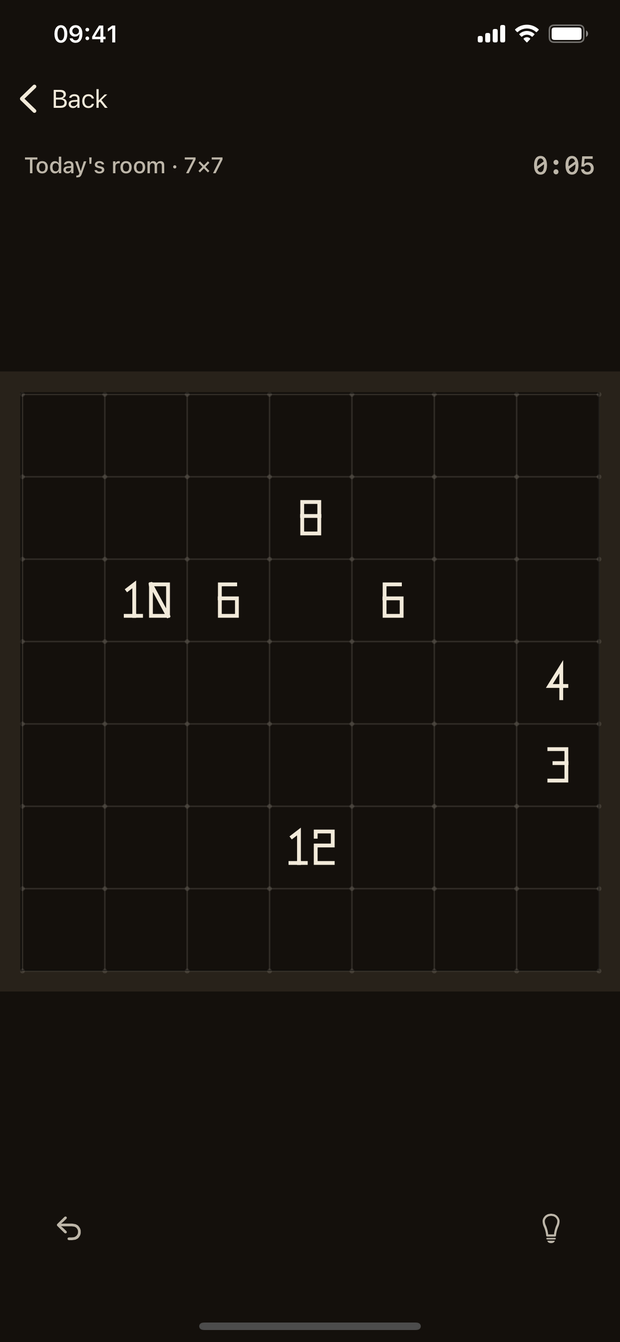
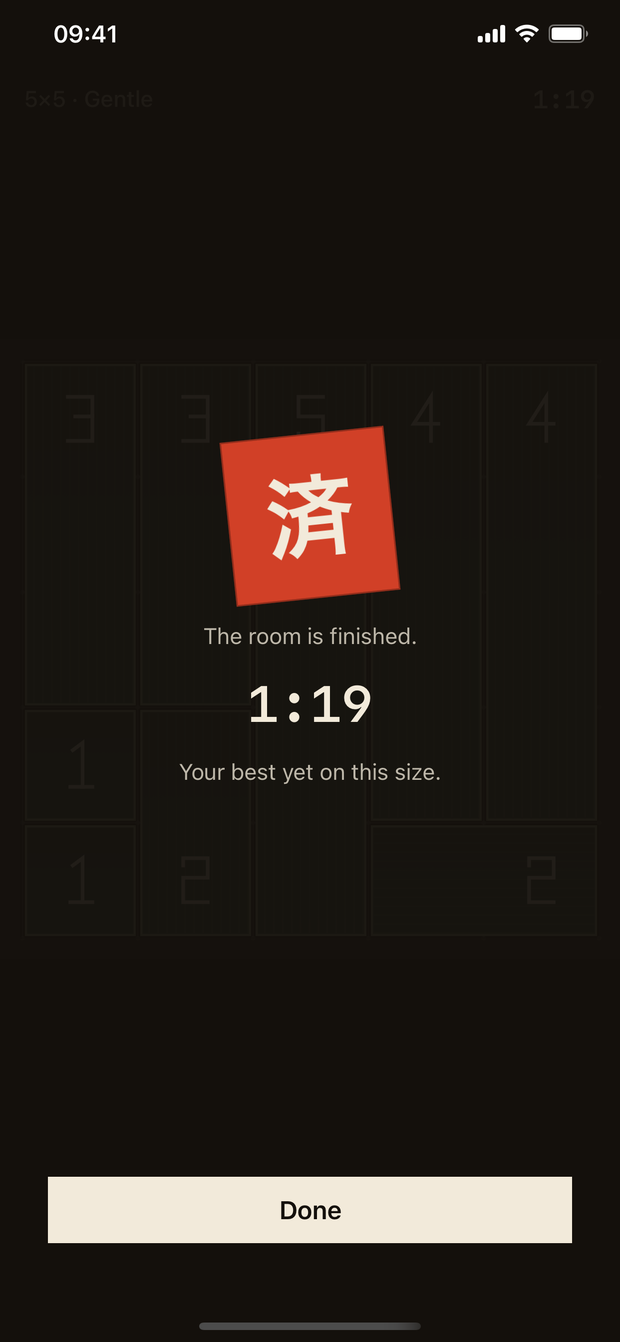
The Shikaku that teaches.
Free to play. One purchase unlocks everything. No ads, ever.
The argument
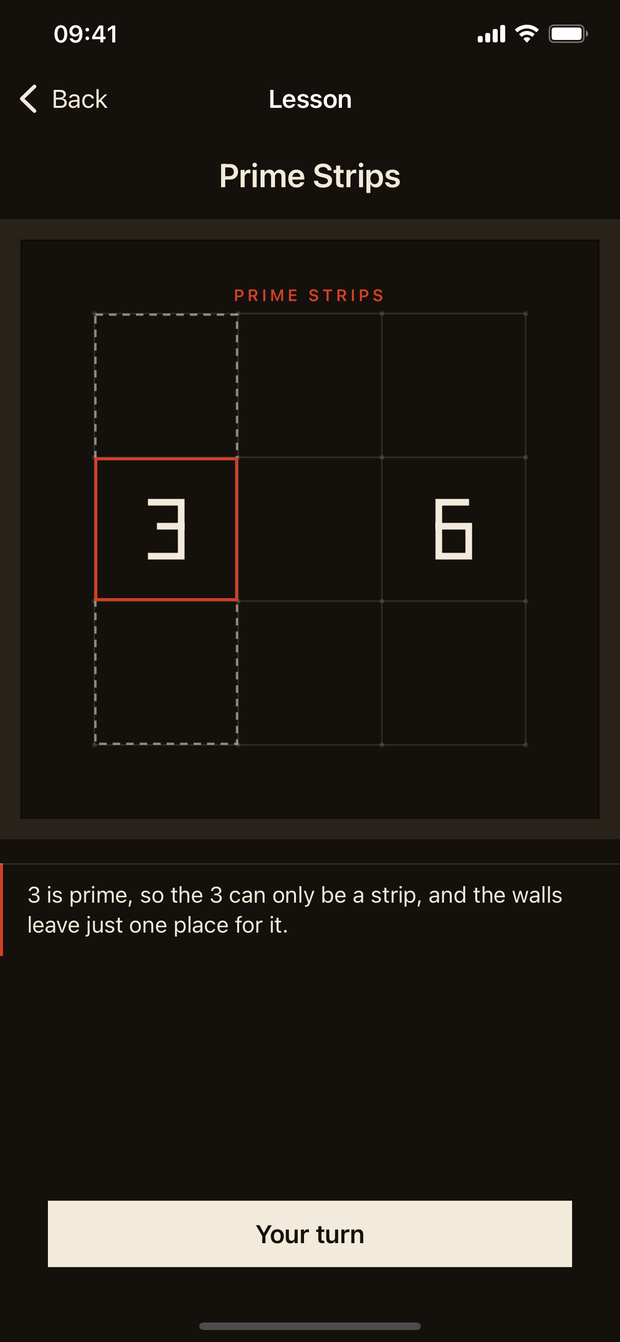
A 3 and a 6 fill a nine cell room. The 3 has exactly one place it can go, and this is the app showing you why rather than filling it in for you.
Two numbers, and one of them can only lie one way.
The curriculum
Shikaku hands you a grid of numbers, and you carve it into rectangles until every number sits in a rectangle of exactly that many cells. The rules take a minute. Playing well takes arguments, ones with names, and no other app in this category names them, teaches them, or checks whether you used them.
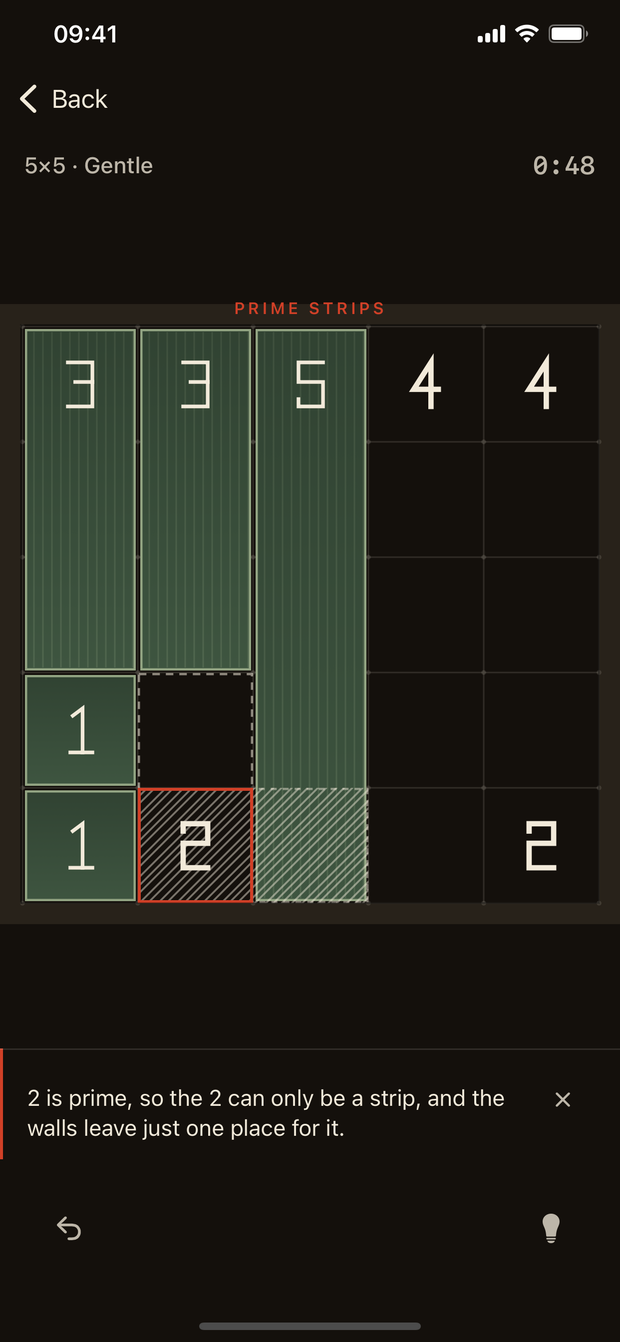
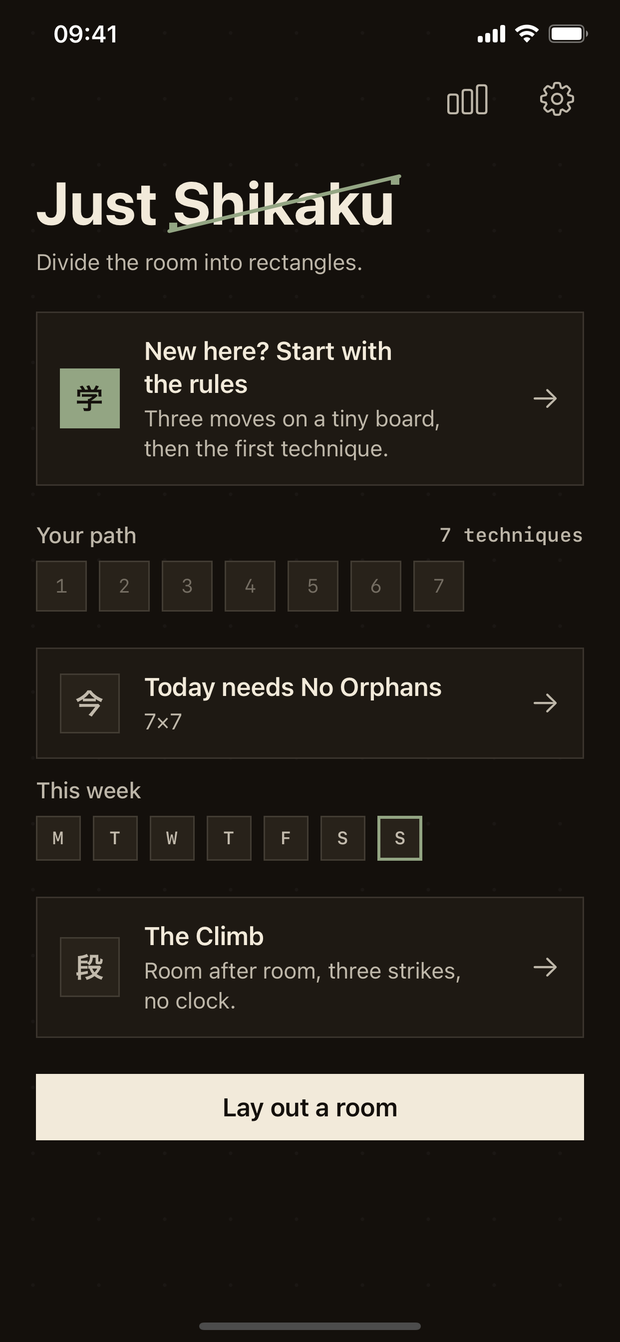
Seven named techniques, each with its own lesson on a real position where that technique is the next move. The path runs from the first easy deduction to the counting endgame, and seven seals fill as you learn.
Ask for help and the reasoning climbs a ladder: a nudge, then the technique's name, then the full argument drawn on your board, exactly like the demo above. The app can lay the rectangle for you, but that is the ladder's last rung and it applies one argued move. Your solve stays yours.
Everyone gets the same room each day, and each day's room is built around one named technique. The week climbs the curriculum, a full week earns its own seal, and missed days stay playable because the boards are deterministic.
After every win the app replays your own solve and checks each rectangle against its solver. Moves it can derive from the position you played them in count as worked out, moves a hint laid are marked as shown, and correct moves beyond the curriculum's reach are called what they are, a leap. No other puzzle app can tell you which of your own moves were reasoned, because no other engine here knows why a move is right.
Spot It serves ten real mid-game positions where one technique is the move. The Climb is room after room up the difficulty ladder. Both end on three strikes, and neither has a clock, because accuracy is the game.
On the phone
No guessing
Before a puzzle reaches you, the engine has verified two things: the board has exactly one solution, and the taught techniques are enough to reach it. Guessing is never required, on any board, at any difficulty. If you are stuck, there is always a next deduction waiting, and the hint ladder will walk you to it.
Your turn
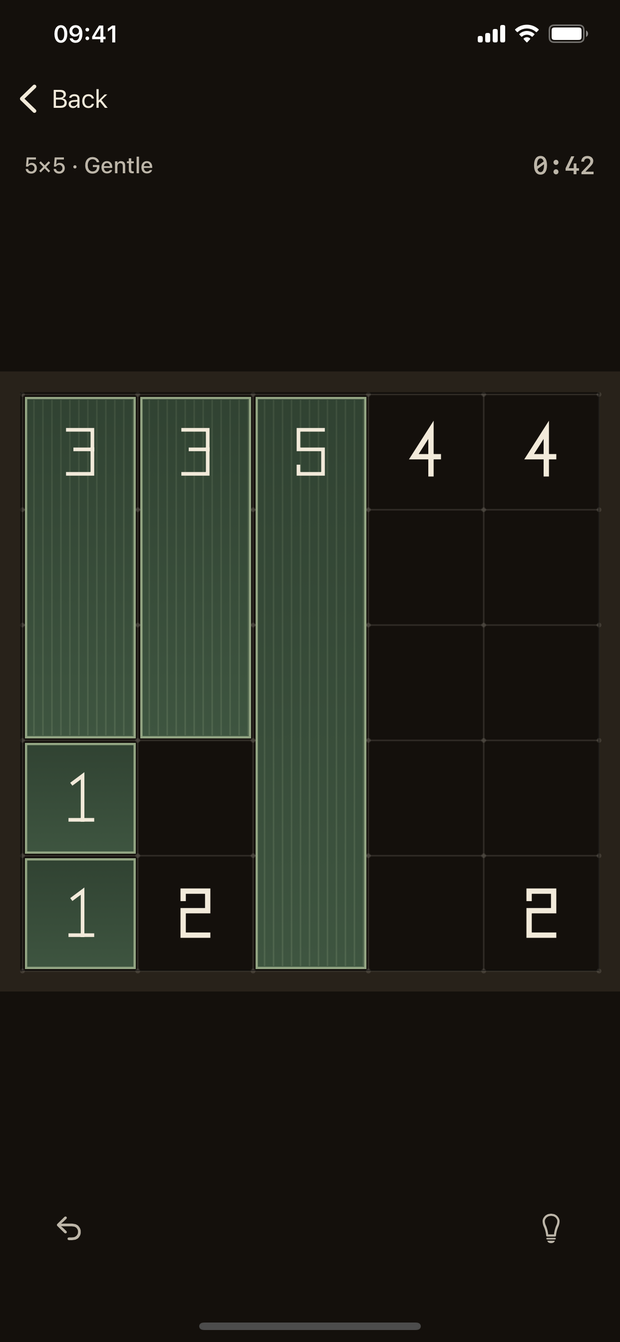
Tap a cell, then tap the opposite corner of the rectangle you want to lay. Tap a laid rectangle to lift it again. This is the board the app's rules lesson uses.
Three numbers, three rectangles, one room.
What it costs
One purchase. No subscription, and no ads. Hints are never a currency, and difficulty is never behind the purchase. Everything works offline.
Privacy
No account, no analytics, no advertising. Your progress is stored on your device and never sent anywhere, and apart from the App Store purchase check the app makes no network requests at all. Full privacy policy.
Support
Settings, then Restore purchases. It is always available, including when the app already thinks it is unlocked. If nothing comes back, check you are signed in with the Apple Account that made the purchase.
Yes, entirely. Every board is built on your device. The one network request the app ever makes is asking the App Store whether the unlock has been purchased.
On the device, in the app's own storage. There is no cloud sync, so deleting the app deletes your stats, best times, streak and lesson progress.
It isn't. Every shipped puzzle is checked twice before you see it: once to prove it has exactly one solution, and once to prove the app's own techniques can finish it. If you are stuck, the hint button will point you at the next deduction. If you still think a board is wrong, mail me and say which one.